New Horizons Reawakens to Probe the Kuiper Belt's Mysteries
NASA's New Horizons spacecraft has resumed operations after its longest hibernation, promising new insights into the far reaches of our solar system.

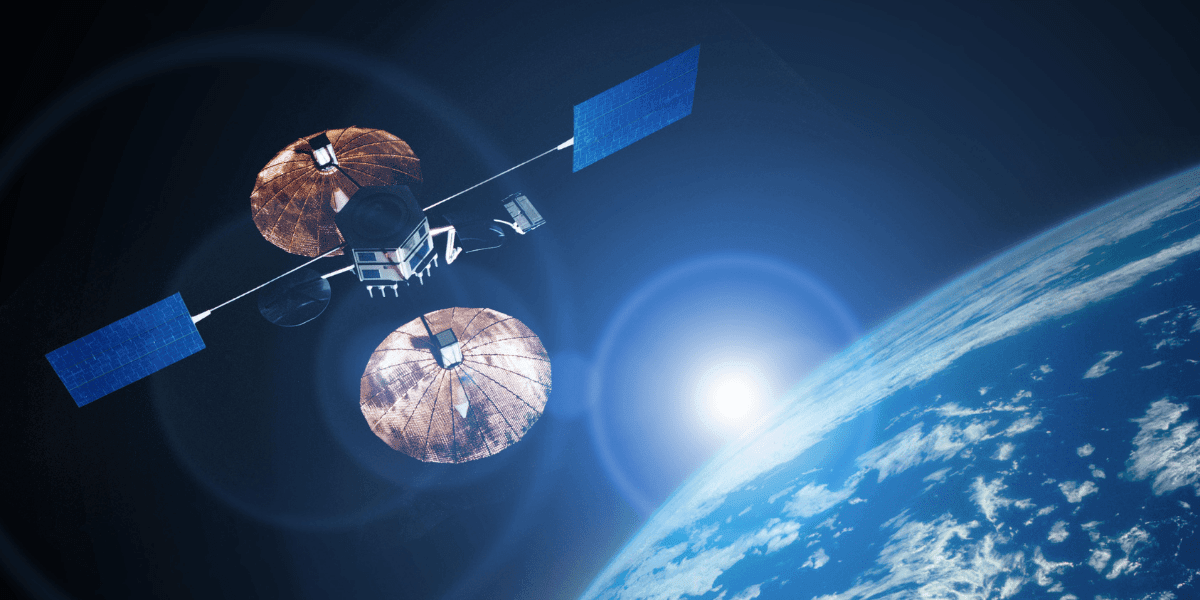
NASA's New Horizons spacecraft has triumphantly returned to full operations after emerging from its most extended period of hibernation. This marks a pivotal moment for the spacecraft, which continues to push the boundaries of human exploration into the depths of space. Positioned on the outskirts of our solar system, New Horizons is poised to send back groundbreaking scientific data from one of humanity's most distant outposts.
The successful reactivation of New Horizons is a testament to the mission's enduring success. Situated approximately 5.9 billion miles from Earth, the spacecraft stands as a beacon of hope and discovery within the vast expanse known as the Kuiper Belt. Almost two decades after its launch and years following its historic encounter with Pluto, New Horizons remains in good health and ready to continue its exploratory mission.
Hibernation and Awakening
After spending 321 days in a carefully planned state of hibernation, New Horizons has been reawakened by NASA. During this dormant phase, the spacecraft relied on pre-programmed commands to operate autonomously. The signal confirming its successful reawakening took close to nine hours to reach Earth, a testament to the immense distances involved. This achievement underscores New Horizons' reliability and the robustness of its design.
Hibernation is an essential tactic for managing long-duration missions. By conserving energy and minimizing wear on its systems, New Horizons was able to extend its operational life. Despite its dormant state, the spacecraft continued to collect valuable scientific data, focusing on key areas such as the heliosphere and the dust environment of the Kuiper Belt.
New Scientific Endeavours
With New Horizons back online, mission teams are delving into engineering and health data before initiating the download of recent scientific observations. The spacecraft's suite of instruments, including an ultraviolet spectrograph, remains ready to study various phenomena like hydrogen gas in the outer heliosphere and solar wind interactions. These studies are crucial for understanding the solar system's dynamics over billions of years.
Having dramatically reshaped our knowledge of Pluto during its flyby, New Horizons continues to break new ground. Its close examination of Arrokoth, a primitive Kuiper Belt object, offered scientists an unparalleled glimpse into the solar system's formative years. Each observation from the spacecraft provides insights that Earth-based telescopes simply cannot achieve.
Technological Advancements and Challenges
NASA is enhancing ground systems to support New Horizons as it journeys further into interstellar space. These software updates will address challenges related to diminishing power and prolonged communication delays. By refining the spacecraft's autonomy, engineers aim to ensure it remains operational and continues delivering invaluable data as it ventures even deeper into space.
New Horizons exemplifies the importance of designing missions capable of enduring the test of time. Unlike missions closer to Earth, this spacecraft must rely on its intrinsic systems to navigate challenges independently. Its success highlights the critical role of autonomous technologies in the realm of deep-space exploration.
The Path Ahead
The reawakening of New Horizons is more than a technical feat; it is a continuation of NASA's quest to uncover the mysteries of the solar system's peripheries. As new data streams back to Earth, researchers eagerly anticipate the insights it will offer into the solar system's origins. New Horizons' journey not only extends the United States' legacy in space exploration but also enriches our understanding of the cosmos.
Through careful planning and innovative technology, New Horizons continues to carve a path through the unknown, offering scientists a unique window into the ancient past of our solar system. Its ongoing mission promises to deepen our comprehension of the universe and our place within it.

New York Daily Contributor
Delia Vasquez
Covers politics and the money behind it, from the city council to Washington's effect on New York.
This article features partner, contributor, or branded content from a third party. Members of the New York Daily editorial staff were not involved in the creation of this content. All views and opinions are those of the contributor alone.