Astralithos Targets The Operational Challenges Behind Critical-Mineral Production
Astralithos addresses critical-mineral production challenges through connected equipment, process intelligence, and preserved operating knowledge.

A processing facility can have advanced machinery, experienced engineers, and a carefully designed production plan, yet still struggle to reach consistent output. The difficulty often appears when individual pieces of equipment must operate together under real production conditions. Feed materials change, operating adjustments affect downstream stages, and teams must learn how the entire process responds.
For critical-mineral processors, this learning period can have significant commercial consequences. Equipment and personnel require investment whether or not a facility has reached its intended production capacity. Delayed ramp-up can also postpone saleable output and extend the time required to recover capital.
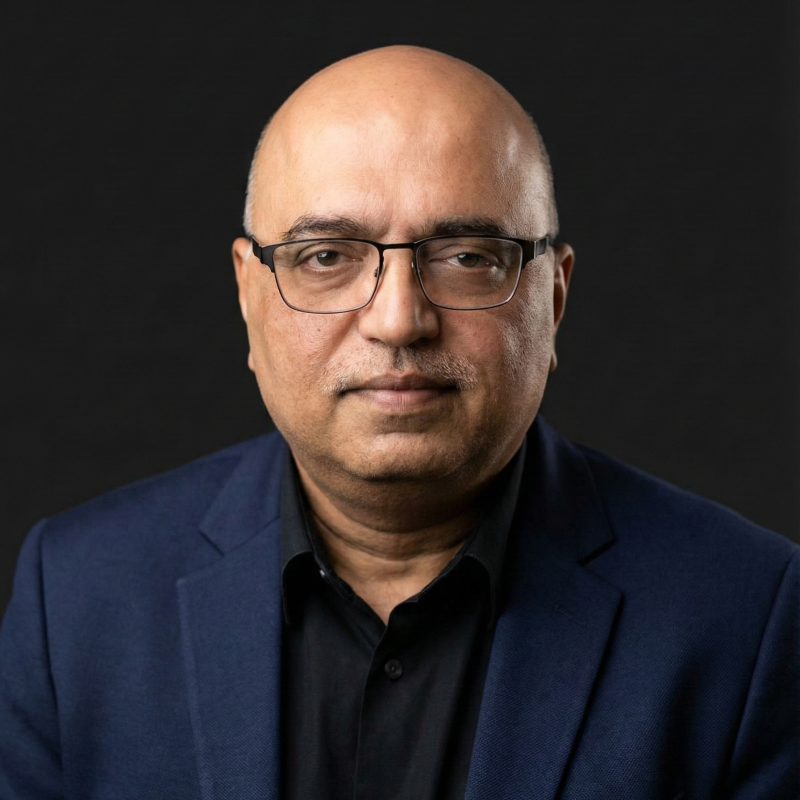
Astralithos Inc. is developing a technology approach aimed at addressing this operational challenge. Founded by Palash Gangopadhyay, the company is designing modular process equipment that combines chemical engineering, artificial intelligence, process modeling, production coordination, and robotics.
Its central proposition is that industrial facilities should not have to repeatedly rediscover knowledge that has already been established through previous operating experience.
The Gap Between Installed Equipment And Reliable Production
Industrial facilities frequently bring together machinery from multiple suppliers. Engineering, procurement, and construction teams coordinate the installation, but the operating organization must still understand how the equipment behaves as a complete system.
This distinction becomes especially important when actual production begins.
A change in material composition can influence processing conditions. An adjustment that improves recovery in one unit may increase the workload of another. Even relatively small operating decisions can create consequences across several stages of production.
Operators gradually learn these relationships through testing, observation, and experience. However, that knowledge is not always preserved in a form that can be transferred to another facility.
Astralithos founder Palash Gangopadhyay describes this recurring challenge as a major motivation behind the company. In his published article, Why I Started Astralithos, he explains how industrial teams can spend considerable time and resources learning to operate combinations of equipment supplied by different vendors.
His proposed solution is to make validated operating knowledge part of the equipment itself, giving future installations a stronger starting point.
Why Critical-Mineral Processing Requires A Connected Approach
Critical-mineral production involves more than extracting or recovering a target material. A successful operation must also manage processing conditions, material quality, equipment constraints, and the economics of each production stage.
Lithium and rare-earth processing provide examples of applications where different unit operations must work together to achieve a consistent final product.
A facility processing lithium-bearing materials, for example, must consider how upstream recovery decisions influence downstream purification requirements. The objective is not simply to maximize the performance of one machine. It is to produce acceptable material across the complete process at a commercially workable cost.
This is the broader problem Astralithos wants to address.
Its proposed system is intended to connect chemical-engineering knowledge with process modeling and production coordination. By evaluating operating conditions and their potential consequences across connected units, the company aims to help teams make more informed decisions.
The intention is to reduce avoidable interruptions and repeated manual intervention while improving coordination between different stages of production.
Preserving Knowledge Through Intelligent Equipment
Astralithos is developing three connected software components as part of its proposed architecture.
VSK is intended to provide chemical-engineering reasoning through an AI model designed to operate on the equipment. Wensura focuses on process modeling and optimization, helping evaluate the effects of operating decisions. CritPath is described in the company's intake as the layer responsible for coordinating production schedules, equipment constraints, and authorized actions.
These components are intended to connect an understanding of process chemistry with the decisions required to manage production.
A robotics layer is also being developed for applicable physical activities such as sampling, material transfer, reagent handling, and packing.
The company describes an operating structure in which plant controls execute approved changes while existing control and safety systems retain their enforcement authority. The scope of automation will depend on the specific equipment, task, and conditions that have been qualified.
This distinction matters because industrial reliability cannot be established through software demonstrations alone. Equipment must be tested under actual operating conditions, and knowledge transferred from one installation must be evaluated against the materials and constraints of another.
A Practical Route From One Unit To An Integrated Plant
Astralithos is structuring its development around three product stages.
The first, SKU 1, is intended to add intelligence, sensing, and automation hardware to an existing process unit, with filtration serving as the initial validation focus.
SKU 2 would bring those capabilities and applicable robotics together within a supplied process machine. The objective is to develop repeatable configurations that can be integrated more consistently.
SKU 3 represents the longer-term ambition of extending the technology across an integrated process train. The company identifies an integrated lithium plant as its flagship development vision.
This staged approach allows the company to establish evidence at a manageable level before progressing toward more complex installations.
Its initial target customers include critical-mineral processors with funded facilities, accessible equipment, and measurable production bottlenecks. Equipment manufacturers are also important potential partners because their machines could provide opportunities to incorporate and validate the technology across repeatable configurations.
A Founder With Experience In Materials Development And Scale-Up
Gangopadhyay's background provides context for Astralithos's focus on the challenges between technical development and industrial production.
A doctorate in chemistry and a career spanning advanced materials research, process engineering, and commercialization have shaped his perspective. At the University of Arizona, he developed graphite purification and battery-material technologies that were subsequently licensed for commercialization through Urbix Resources.
He later served as Urbix's chief technology officer, overseeing the commercialization of these technologies.
The experience gave him exposure to the practical requirements of moving scientific developments toward industrial applications. It also demonstrated why technical performance must be considered alongside equipment readiness, production consistency, and commercial viability.
Astralithos builds on this experience with a different objective: developing equipment that can retain and apply operating knowledge across successive installations.
Measuring Progress Through Industrial Evidence
The company's longer-term ambitions include helping facilities reach saleable production sooner, improve operating consistency, and reduce the time spent rediscovering how equipment systems behave.
Its stated development targets include improving first-of-a-kind plant ramp-up timelines and supporting overall equipment effectiveness near 90 percent. These are ambitions that must be demonstrated through physical equipment validation and defined operating conditions.
The next stage is therefore focused on establishing measurable benefits through equipment testing and customer deployments.
For the critical-mineral industry, the broader question is not simply how advanced a processing machine can become. It is how effectively the knowledge behind that machine can be preserved, applied, and improved.
Astralithos is developing its technology around that question. Readers can explore the company's approach through the official Astralithos website, learn about its founder's professional background on LinkedIn, and read his account of the operational problem that inspired the company in Why I Started Astralithos.

New York Daily Contributor
Delia Vasquez
Covers politics and the money behind it, from the city council to Washington's effect on New York.
This article features partner, contributor, or branded content from a third party. Members of the New York Daily editorial staff were not involved in the creation of this content. All views and opinions are those of the contributor alone.
More From New York Daily