Opera and Jazz Unite in Bold Lincoln Center Premiere
Lincoln Center's innovative 'The Comet/Poppea' blends opera and jazz, inviting reflection on timeless themes of power and ambition.

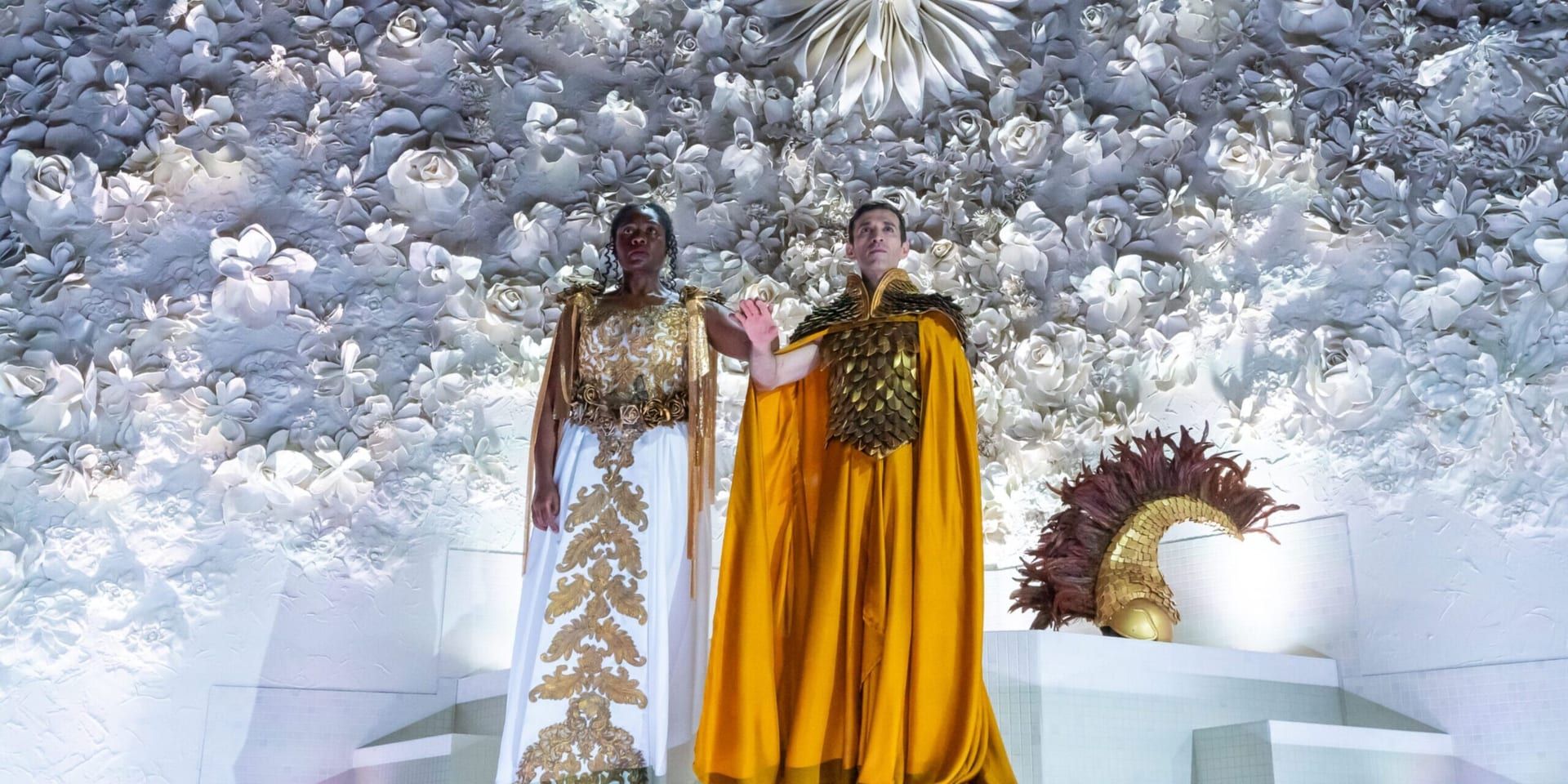
The curtain rose at Lincoln Center with a groundbreaking production that bridges the gap between two seemingly disparate worlds: opera and jazz. 'The Comet/Poppea,' part of the Summer for the City series, has captivated audiences with its daring fusion of Claudio Monteverdi's L'incoronazione di Poppea and George E. Lewis' jazz-infused The Comet. Directed by Yuval Sharon, this unique performance offers a thought-provoking exploration of power, ambition, and historical cycles.
Through an inventive blend of musical styles and thematic depth, 'The Comet/Poppea' transports viewers from ancient Rome to the Jazz Age, weaving a narrative that reflects on how human desires and corruptions transcend time.
Bridging Baroque and Jazz Musicality
Central to 'The Comet/Poppea' is its audacious combination of Baroque opera and avant-garde jazz. Monteverdi's 1643 work, with its intricate harmonies and dramatic storytelling, intertwines with the modern, improvisational flair of Lewis' composition. The result is a rich tapestry of sound that challenges and delights, reflecting the production's overarching themes of ambition and moral complexity.
This musical marriage not only enriches the narrative of Poppea's rise to power in ancient Rome but also casts a new light on the existential themes explored in jazz's unpredictable rhythms. The fusion of these distinct styles underscores the timelessness of human ambition and desire, creating a soundscape as diverse and complex as the characters it portrays.
Visual Juxtaposition: Rome and New York
The production's set design serves as a visual metaphor for the thematic contrasts. On one side, a Roman bathhouse complete with marble columns and statues embodies the grandeur and decadence of Poppea's world. On the opposite side, an Art Deco eatery evokes the opulence of 1920s New York, drawing a parallel between the two eras' shared moral ambiguities.
These contrasting settings not only enhance the audience's understanding of the characters' motivations but also highlight the cyclical nature of history. The juxtaposition invites viewers to consider how societal norms and the pursuit of power remain constant, regardless of time and place.
Thematic Depth: Echoes of Ambition and Corruption
At its core, 'The Comet/Poppea' examines the relentless pursuit of power and its consequences. Poppea's manipulation and ambition to become empress mirror the ethical compromises of the Jazz Age, where societal conventions were often disregarded in favor of personal gain. These themes resonate throughout the production, woven together by both the musical and visual elements.
The interplay between Monteverdi's and Lewis' works underscores the emotional intensity of these themes. This blend of classical and modern music not only breathes new life into the ancient tale but also encourages reflection on how history's lessons continue to resonate today.
Reimagining History Through Art
'The Comet/Poppea' offers more than a novel theatrical experience; it challenges audiences to rethink the interplay between history and art. By linking the opulent yet morally ambiguous worlds of ancient Rome and Jazz Age New York, the production underscores the timelessness of human struggles for power and pleasure.
Through its innovative fusion of music, set design, and storytelling, 'The Comet/Poppea' provides a compelling commentary on the cycles of history. This bold and engaging performance not only captivates but also prompts audiences to consider the enduring nature of ambition and desire. It serves as a remarkable testament to the power of theater to illuminate and challenge our understanding of the past and present.

New York Daily Contributor
Rourke Donnelly
Covers sport and the city's cultural life, following the teams, the venues and the people who fill them.
This article features partner, contributor, or branded content from a third party. Members of the New York Daily editorial staff were not involved in the creation of this content. All views and opinions are those of the contributor alone.